Thursday, February 7, 2013

Apollo Cast Drawing

Here is my first cast drawing. This was a lot harder than copying from the flat. I attempted to use the sight size method but found that my cast was too small . In the end, I had to do my best and I scaled my drawing up as you can see in this first photo. Here are a few links for sight size method when you have good size cast:
Sight-Size Method by Ben Rathbone.

Here's my process...
1. I usually start with drawing a center vertical and horizontal line to help with measurements. I start by roughing out the form with straight lines on a lower quality paper in graphite. Straight lines like some of the first plates in the Bargue exercises. I like to use a low quality paper to make all my mistakes and make sure to get the proportions right. 

2. Second I'll start to smooth out the hard lines and put more detail defining as much line work as I can. Sometimes I'll block out shadows with graphite on the drawing to help me get a feel for shadow shapes. At this point keeping everything pretty light. Filling in some shadow might cause me to see something I missed and I can correct the line work.

3. Next, I trace the graphite sketch with tracing paper. Now I'm ready for the final piece and bring out the higher quality paper. I transfer all the line work from the trace to the high quality paper using graphite transfer paper and a red ball point pen. I use a colored pen so I'll know what I've gone over. Be carful with the transfer paper cause it can get graphite everywhere.

4. With a clean outline I can now start with charcoal. I usually start pretty light at first and lay in the charcoal a little at time. First block in mid tones then come in darker. I've tried vine charcoal but don't really care for it. Its too messy. I like to use general's charcoal pencils (form 2H ext hard to 6B ext soft), lots of blenders and kneaded erasers. 


Apollo Cast: Charcoal 18 X 20

Saturday, January 26, 2013

Peppers

Peppers oil painting. I wanted to try and stay with some items that were simple in shape and color. Looking back on this I shouldn't have selected perishables. Of course I had to take photographs.
I don't have all the stages here but did take photos the basic stages.

1. The Burnt Umber under layer.

2. The "dead layer" is monochromatic and used to model the shadows without the complexity of color.

3. First color layer. I started to bring in the color slowly. 


4. Additional layers of color really brings it out.


11" X 13" Oil on Canvas

Saturday, January 19, 2013

Friday, January 18, 2013

Sketch Book

Here is some sketch book work and a few Bargue copies. All these are done in graphite.


Sunday, January 13, 2013

Bargue Copy Work

After reading from a few sites, I found that if I want to learn to render like the masters I should start from the flat and do some basic copy work and Charles Bargue was what everyone seemed to be using. I found the book and ordered it from Dahesh Museum of Art www.daheshmuseum.org. Its now available on Amazon and is an excellent book to start your copy work from. I highly recommend it!

I had never used charcoal before and I found the General's pencils to work the best from 2H (Ext Hard) to 6B (Ext Soft). Get some blenders and a few Kneaded erasers too. Vine charcoal, which although may allow you to get very rich darks, I found to be very messy. So if you do get some, use it sparingly. 

Here is a copy Plate 60 I did 2009. Looking at it now I can see plenty of errors. This is all part of the process. I started with plates 1 through 10 and then skipped around and copied what I thought was interesting. 


Saturday, January 12, 2013

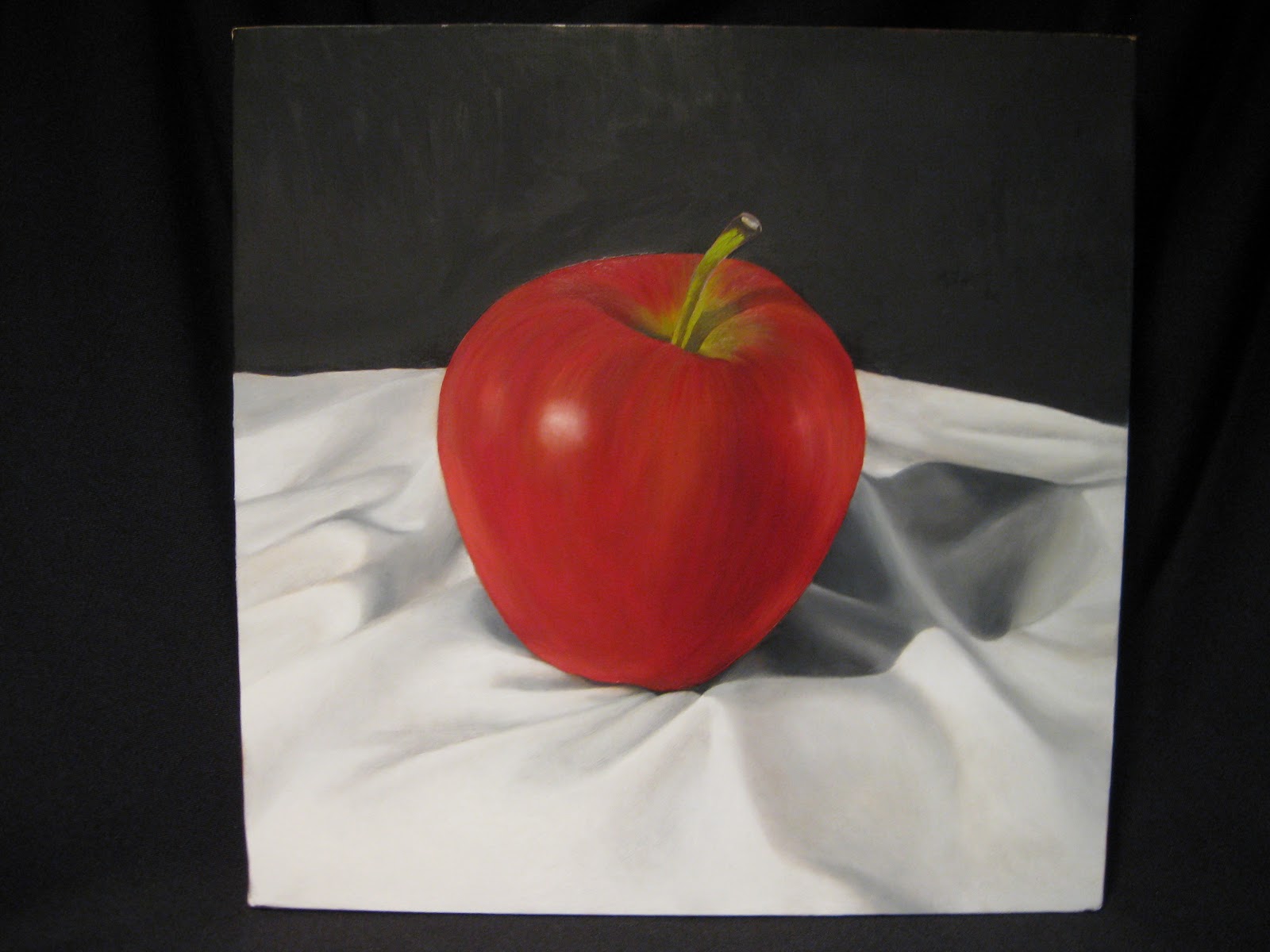
First Oil Painting - The Apple

I started oil painting a few years ago and wanted something simple to start with so I choose an apple. I later learned that I should have started with something even simpler. I'm trying to learn the techniques of the old masters and wanted to experiment with the process. I should have took more photos of the first phases but I didn't think about it till later. In later posts I'll explain some of the process. But for now, here is The Apple.


12" X12" Oil on Canvas